About
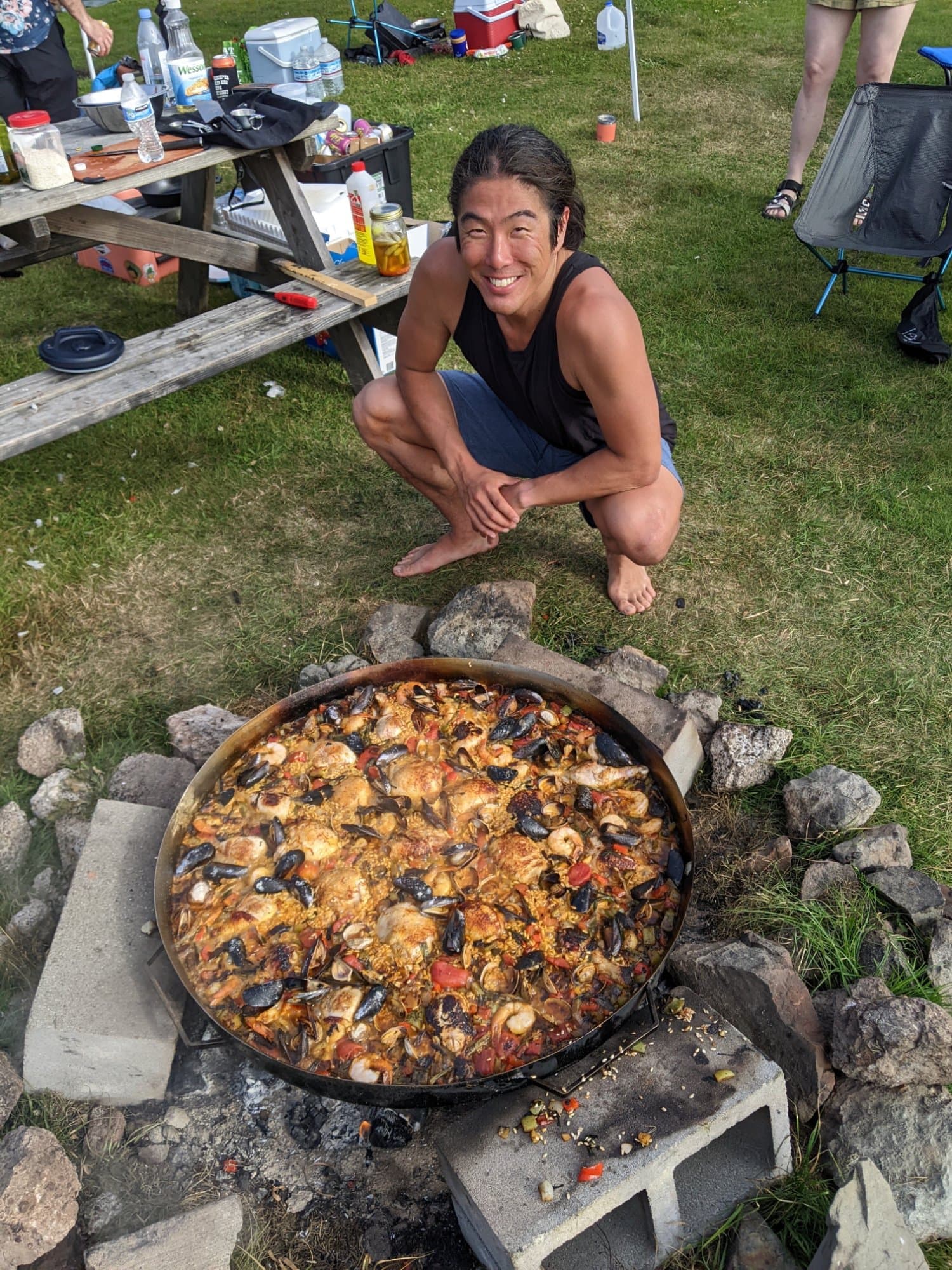
The human behind the work


Marketing philosophy
“The opposite of a good idea is also a good idea.” — Rory Sutherland
Most marketers start with the channel, the budget, and the platform. I start with a question they rarely ask: how do I want the customer to feel?
Before I touch an account, I'm studying customer data, listening to sales calls, and paying attention to how real people talk about the product in their own words. By the time I build the first campaign, I already know the emotional language that will land — because I've heard it directly from the people I'm trying to reach.
It helps that I'm more technical than most creatives — my career started in software engineering — so I can build the systems that test these ideas quickly. And now, with AI tools closing the loop in real time, the gap between intuition and validation is shorter than ever.
I don't reject best practices. I just don't bow to them. When the data says the unconventional path outperforms, I take it without hesitation — and I usually find that it does.
The AI stack
You're not hiring a marketer who uses AI. You're hiring a marketer who builds with AI. Here's what that looks like in practice:
Claude Code + VS Code
Custom tools, landing pages, data pipelines, and internal apps. This site was built with Claude Code.
Xcode + SwiftUI
iOS app development for prototyping and building mobile experiences.
AI-powered analysis
Competitive audits, ad creative analysis, and market research in minutes instead of days.
Workflow automation
AI-assisted reporting, content generation, and campaign optimization across the full funnel.
Beyond the work
Surfer. Salsa dancer. Lifelong piano player focused on improvisation and music theory. Competitive shooter. Beginner chess player working toward 1000 ELO. Language learner (Spanish and Korean). World traveler with a deep curiosity about how cultures build and communicate.
I believe the best marketers are the ones with the broadest range of inputs. Surfing teaches you timing. Salsa teaches you to lead and follow. Piano teaches you that the best improvisations come from deep knowledge of the fundamentals.
Working temperament
Most personality tests are entertainment. The Big Five Aspects Scale is not. It's built on the Big Five model — the only personality framework with decades of peer-reviewed psychometric validation behind it. It's what actual research psychologists use, and it's predictive of real-world outcomes in work, relationships, and leadership. I took it because I think self-knowledge is a competitive advantage. Here's what it says about what it's like to work with me.
I score in the 91st percentile for industriousness. I don't coast, I don't need to be managed, and I don't let things slip. When I take on your business, it becomes my problem — not because I'm paid to care, but because I'm wired to. My compassion score (96th percentile) means I genuinely internalize my clients' goals. You're not getting a vendor who checks boxes. You're getting a partner who loses sleep over your CAC.
My intellect score (82nd percentile) drives how I approach problems — through frameworks, first principles, and cross-domain thinking rather than playbooks. My orderliness score (36th percentile) means I'm not the person who builds your SOPs. I'm the person who figures out the strategy that makes the SOPs worth building.
And my volatility score — 3rd percentile — means I don't panic. When a campaign breaks, when iOS changes the rules overnight, when the board wants answers by Friday, I'm the same person in the room. Calm, analytical, already thinking about the next move.
How I work
Engagement
Fractional (1-3 days/week) or full-time
Location
Based in Austin. Happy to work virtually anywhere or travel as necessary.
Communication
Async by default. Meetings when they matter.
Philosophy
Outcomes over hours. Systems over campaigns.