You scanned the card
Here's the work.
Fractional CMO for the AI era. The role used to stop at strategy — brief the agency, approve the campaign, read the report back. It does not anymore. The same person now builds the websites, ships the campaigns, and stands up the data pipelines and MCP servers that make the system measurable. Strategy includes execution. Execution includes building.
Everything on this page is proof of that. Three brands rebuilt cold, before any conversation. And the AI reporting stack that gets deployed underneath the campaigns I run.
Joe Kim. Fifteen years in DTC and ecommerce, now consulting independently.
How the work happens
Show, don't tell.
Most fractional CMOs pitch with a deck of advice and a roadmap that lives on someone else's calendar. The work is different. Four moves, none of them a slide.
01
I find the gap.
Public data only. The website, the ad library, the reviews, the competitors. Almost every brand has the same fracture: a genuinely strong product, and a marketing surface that does not connect it to the person who should buy it. I name that gap precisely.
02
I design the test.
Three experiments for the first 30 days. Each one specific to the business in front of me, each with a hypothesis and a number that settles it. No generic best practices, nothing you could have read in a newsletter.
03
I build the fix.
The part almost everyone skips. Rebuilt product pages, quizzes, diagnostic tools, full campaigns — live and clickable. You are not buying my promise. You are clicking my work.
04
I stand up the measurement.
An AI reporting stack underneath the work — GA4, Search Console, paid ads, business listings — measurable from day one, by the person who built the campaigns. Automation drafts the report. Marketing judgment reads it and calls what changes next.
Built cold
Three companies. Three gaps. Three things I built.
I picked these brands, named the gap, and built the fix — rebuilt product pages, quizzes, diagnostic tools, live and clickable. This is what the campaign side of the engagement looks like in practice. The work you click through below is the work that ships when we work together, just done without an invitation.
Open any one.
Premium CPG / Protein
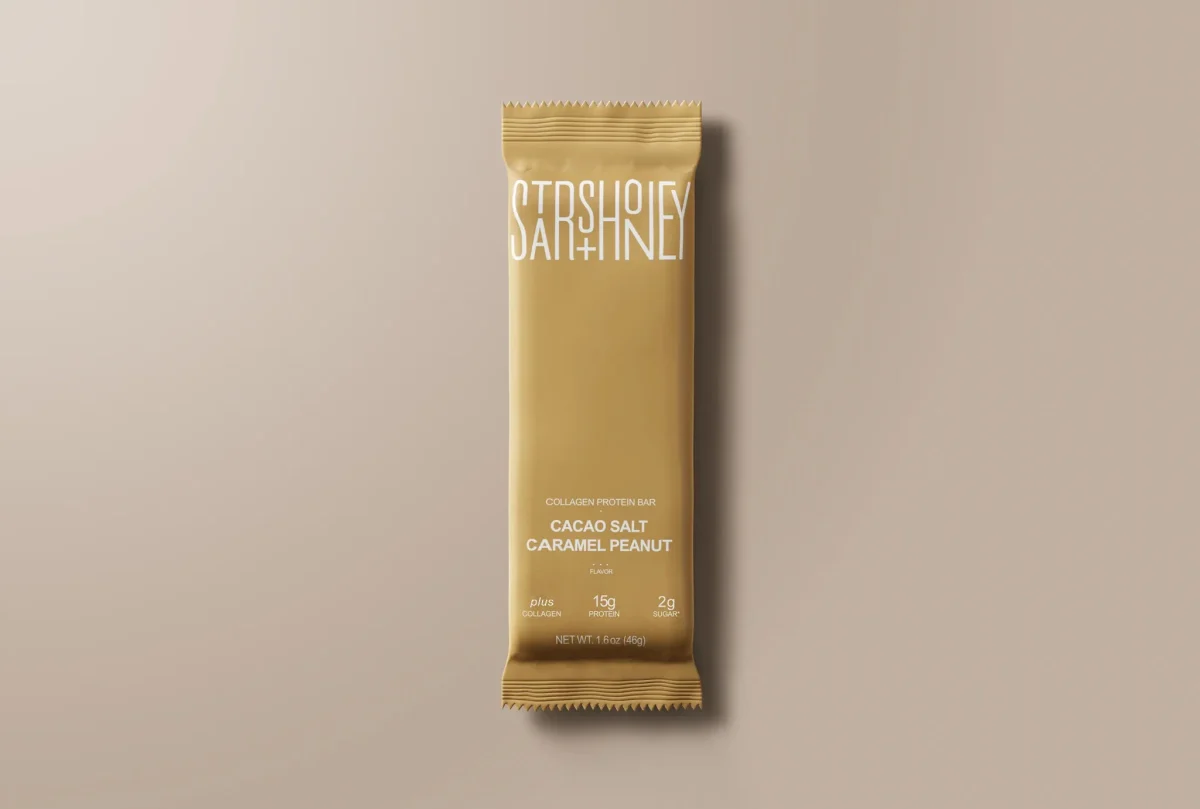
Stars + Honey
The Habit Gap
Marketed for discovery; the economics need the regular.
A reported repurchase rate north of 80% proves the habit forms once a customer is in. But the marketing is built for discovery: variety packs merchandised first, flavor copy written like sommelier notes, an invitation to come taste something new. Premium-priced bars do not make money on novelty. They make money when the buyer stops deciding. The funnel recruits the curious taster when the economics need the regular.
What I built
Three working prototypes. Two rebuilt product pages that anchor the bar to a daily ritual, morning coffee and after-dinner dessert, plus Find My Pairing, a four-question matcher that hands an unsure buyer one flavor, one pairing, and a routine they can repeat tomorrow.
See it liveBeauty / Skincare
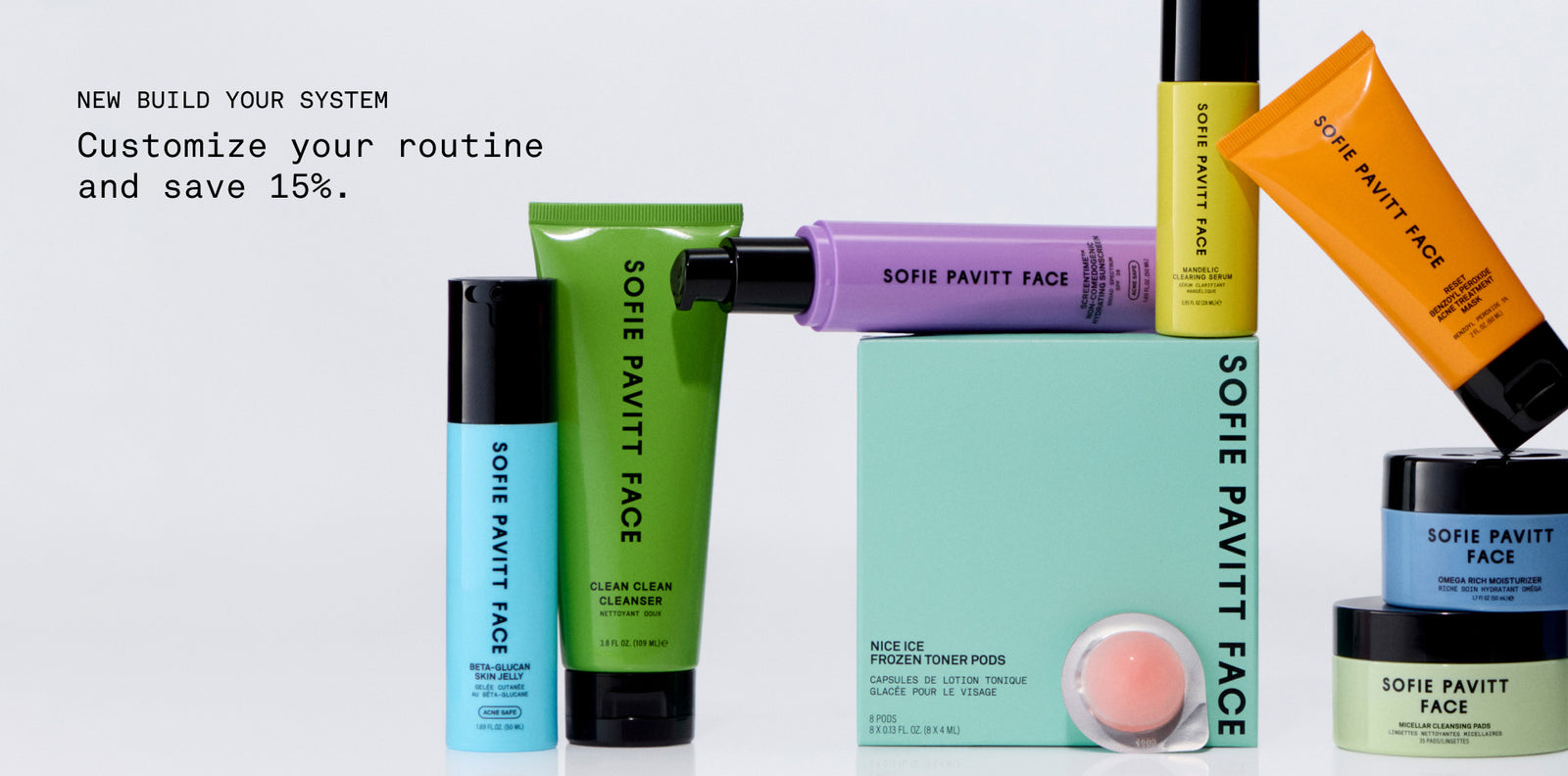
Sofie Pavitt Face
The Positioning Gap
High-intent buyers have to assemble their own routine.
A sharp adult-acne brand with real retail traction and a founder with genuine credentials. But its own site leans on already knowing who that founder is, and never names an anti-customer. Build-your-bundle asks the buyer to self-assemble a routine, which is exactly the work the highest-intent buyer cannot do. The person who would convert hardest never gets the signal that this is for them.
What I built
Two working prototypes. A five-question Skin Finder that replaces guesswork with a real recommendation, and a Pore Checker that lets a shopper scan any product label with their phone camera, catching competitors' customers mid-decision.
See it liveDTC / Subscription
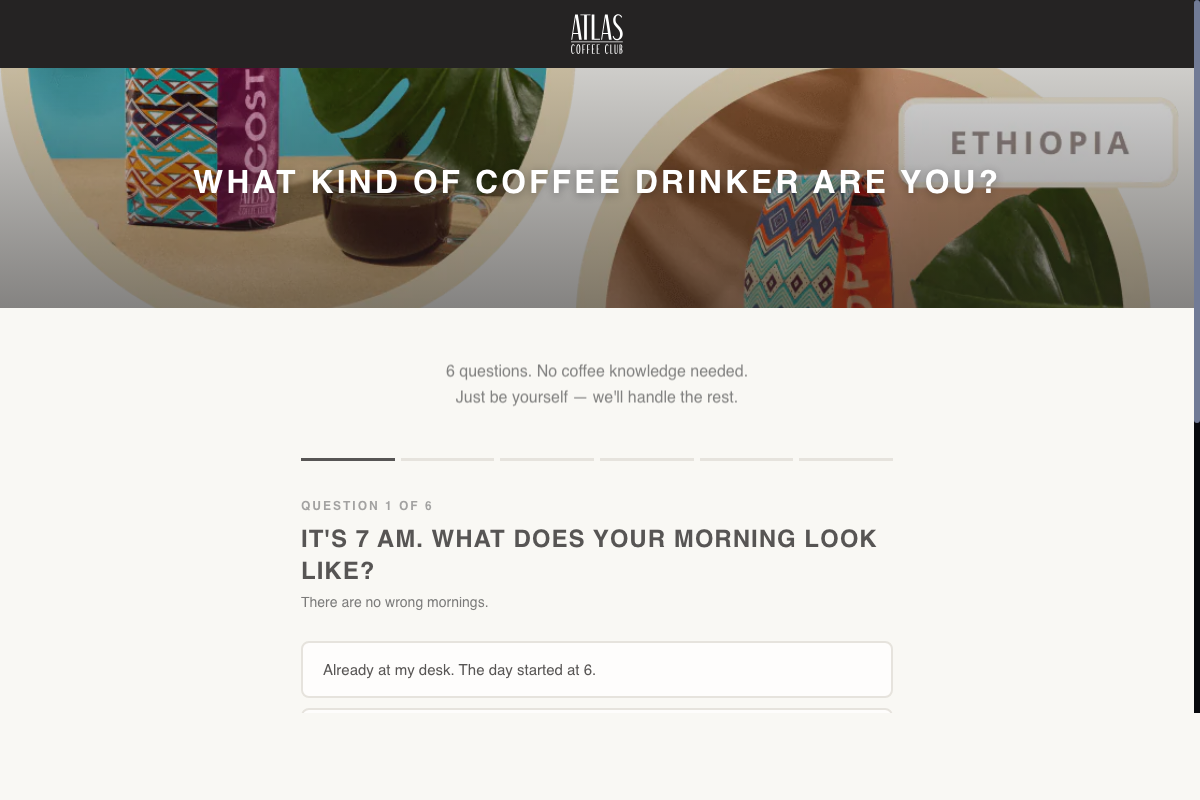
Atlas Coffee Club
The Identity Gap
Selling the coffee instead of the coffee drinker.
Atlas roasts single-origin coffee to order at meaningful scale, with real product-market fit. But the marketing sells the what, the origin and the roast profile, instead of the why. Every paid ad is generic UGC you could not tell apart from any other coffee subscription. The coffee is all over the content. The coffee drinker is nowhere in it.
What I built
An identity-driven campaign, What Kind of Coffee Drinker Are You, built on six drinker archetypes people actually want to claim and argue over. It turns paid spend into earned reach and makes Atlas creative impossible to confuse with anyone else's.
See it live
Running in production
The reporting stack that ships underneath the campaigns.
The other half of the engagement. Strategy and campaigns are visible above. The system that measures them is below — deployed inside the org, not just talked about.
Running today across ~40 client accounts for an agency partner. Each month it reads a master Google Sheet, plans every data pull, executes them against AgencyAnalytics, GA4, and Search Console, then a deterministic script does the math and renders each branded report — filed where the team reviews, adds judgment, and delivers. A team-week becomes a scheduled batch on the 1st.
Inside one brand it works the same way, scoped to one company instead of forty — built and operated by the same person making the strategic calls.
AI has escaped the chatbox. Marketing leadership now includes building the systems underneath it.
The hard part
Multi-source orchestration.
AgencyAnalytics, GA4, and Search Console each feed in through MCP connectors. A script plans every call and pins each response to a file; the model only runs the pulls; a second script does all the math and cross-checks before it renders. The LLM never holds the numbers, so it can't fabricate them. Scheduled batch, not a microservice.
The real unlock
"What specific product or value proposition is generating the most revenue across all channels?"
The deck is the visible artifact. The asset is every data source — GA4, Search Console, and every paid channel — wired into one workspace an LLM can read. Questions that used to mean a half-day of pulling exports are now a sentence. The monthly deck is one output of that capability.
Your turn
Curious what I'd find in yours?
Every brand above got this cold. No brief, no invitation. If you want to know what I would find in your funnel, what your customers see that you cannot, what the campaigns should be, and what the reporting stack underneath them would look like — that is the call. Thirty minutes. I will come with a point of view, not a questionnaire.
Or write me directly: hello@joekim.info